Feb 9, 2026, 11:48 AM
by
Catherine Lees
Emissions and waste management directives in the UK and Europe include regulations surrounding the emissions of nitrogen oxides (NOx) produced by the incineration of waste.
NOx causes air pollution by reacting with air in UV light from sunlight to form ozone, the primary component of smog. Therefore it is crucial to limit NOx emissions in applications that produce large quantities of these gases.
Situation
A leading engineering firm specialising in environmental projects approached SNP to advise on a flue gas treatment solution for its client’s new waste treatment and recovery plant.
The flue gas treatment system was for the EfW (energy from waste also known as waste to energy) incinerator at the plant. EfW incinerators produce heat and electricity by recovering the energy contained in the municipal solid and household wastes left after recycling.
The client was seeking a spray system to inject urea solution into the incinerator in order to reduce the NOx content, a process known as DeNOxing.
Challenges
- Need for even distribution of the reagent within the process stream to ensure full furnace coverage
- Variable case loads requiring variable flow rates
- High temperature environment between 850°C and 1050°C meaning:
- small droplets needed but not so small that the fluid evaporated immediately
- nozzle material needs to withstand the intense heat
- Cost effective solution
SOLUTION
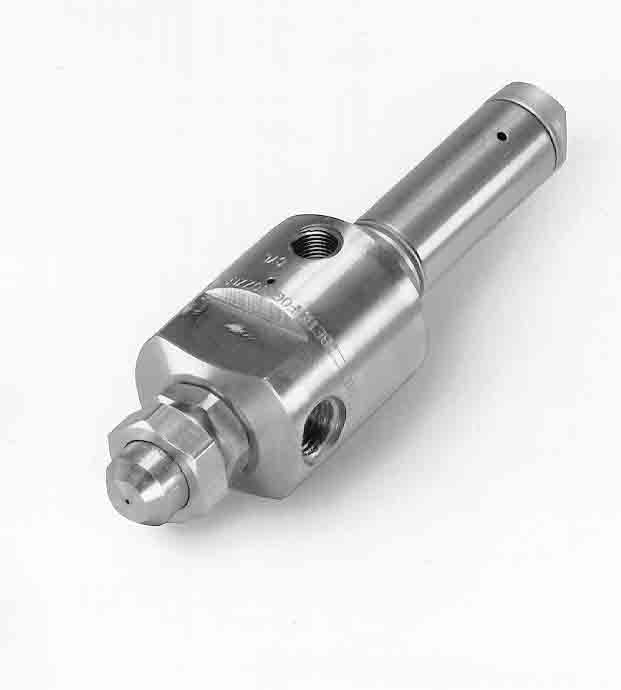
SNP engineers recommended a spray system using the XAPR nozzle. The XAPR is a pressure fed, internal mix, narrow angle air atomising nozzle. Air atomising nozzles use the energy in compressed air to produce highly atomised sprays even at low flow rates.
In a pressure fed system the liquid is supplied under pressure to the nozzle. Air and liquid regulators control the fluid delivery pressure while an air filter with liquid strainer ensures the supplied fluids are of high quality.
The XAPR was able to deliver a droplet size which allowed excellent penetration of the incinerator and significantly reduced the expected consumption of compressed air.
SNP proposed a 12 inch lance extension between the nozzle and the body of the XAPR. This meant that only the nozzle tip needed to be made in Hastelloy rather than the whole assembly as only the tip would be subjected to the intense heat and the rest would be protected by the incinerator’s heatshield.
An air operated shut off system was included in each assembly to enable a reduction in flow rate for lower case loads.
SNP proposed seven injection lances operating at 2 bar liquid and 2.1 bar air pressure at a total fluid flow rate of 756 litres per minute.
PRODUCT
¼’’ BSP XAPR300
Spray pattern: full cone
Spray angle: 22°
Pressure: 2 bar (liquid), 2.1 bar (air)
Total fluid flow rate: 756 litres per hour
Total air consumption: 7.14 Nm³ per hour
Materials: C276 Hastelloy, 316 stainless steel
RESULTS
The XAPR injection lance assembly system offered an ideal solution for the DeNOx application. The customer was also impressed by the cost savings due to not having to make the whole assembly in expensive Hastelloy and due to the significant reduction in compressed air consumption compared with what had been anticipated.