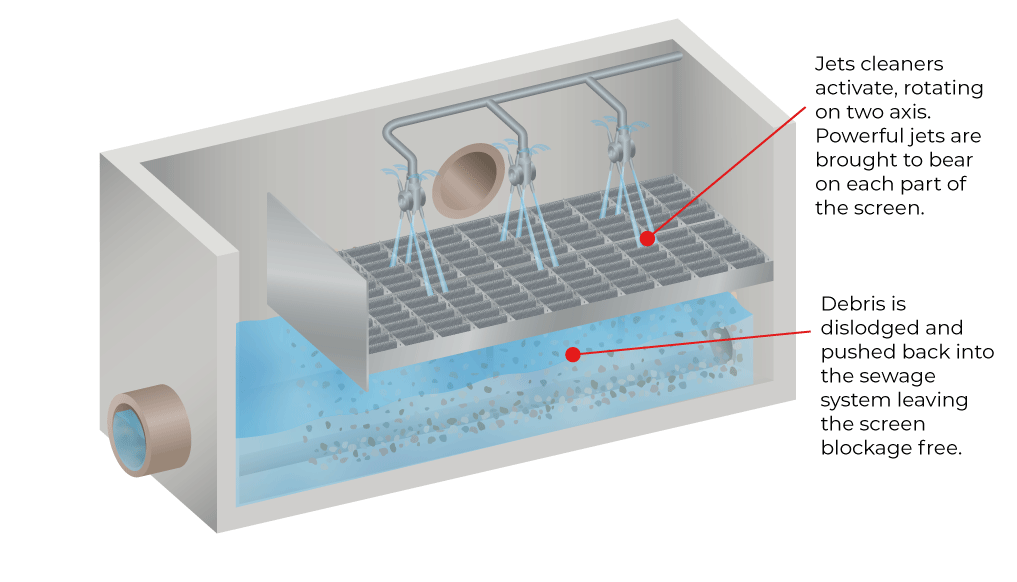
Combined Sewer Overflow (CSO) chambers are designed to allow water levels to rise naturally during periods of heavy rainfall. When the system reaches capacity, excess water is diverted into an overflow pipe. From there, it is either stored in attenuation tanks or discharged at controlled points into the sea or nearby watercourses.
This process helps prevent sewage from spilling into unwanted locations such as roads or pavements.
A vital part of every CSO chamber is the screen, which filters out solid materials from the overflow. By preventing solids from entering the overflow route, the system helps ensure that harmful debris is contained within the main wastewater network rather than being released into rivers or other natural water bodies.
Below are four common challenges faced when cleaning CSO screens in the water industry, along with typical solutions.
1. Remote or Inaccessible Sites
Many CSO sites are difficult to access, and even when personnel can reach them, the screens may still be positioned in areas that are awkward or unsafe to work on.
In some cases, wash water is not available on-site, making manual or temporary cleaning approaches impractical.
Solution:
Automated cleaning systems with built‑in wash water infrastructure to enable safe, reliable, hands‑off cleaning.
2. Shadowing from the Screen
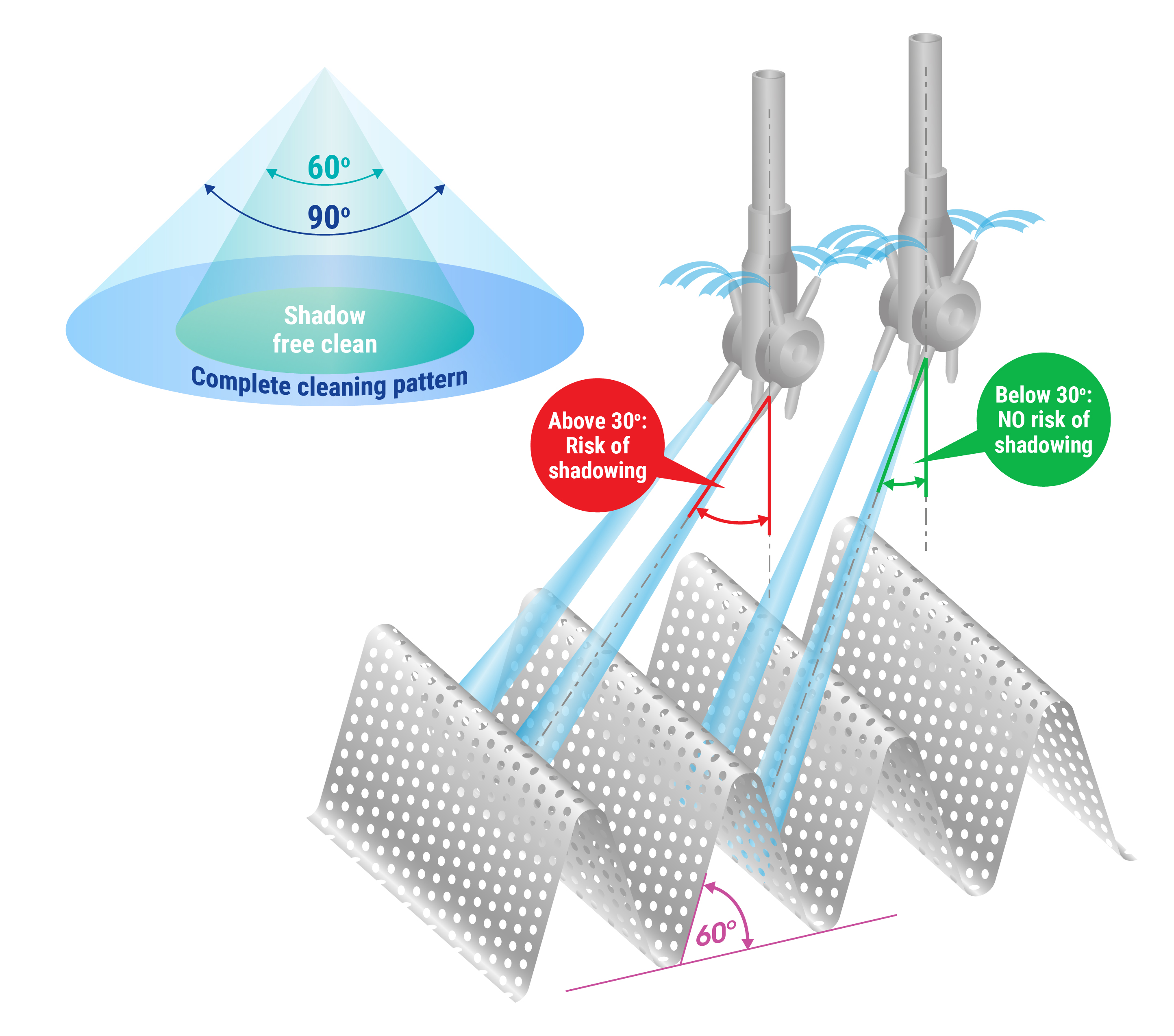
CSO screens are sometimes manufactured in a wave or curved form.
This shape creates ‘shadowed’ areas that are difficult for water jets to reach, reducing cleaning effectiveness.
Solution:
A properly designed, purpose‑built cleaning system that considers the geometry and profile of the screen. Simply directing water at the surface is not enough—successful cleaning requires an engineered approach that ensures full coverage.
3. Tough Residue
Fats and oils can accumulate on CSO screens, forming sticky residues that trap and bind solid materials.
Although solvents can dissolve these substances in other industries, such methods are generally impractical for water‑industry screening systems.
Cleaning therefore relies on sufficient water impact and volume.
Solution:
A well‑engineered jetting system capable of delivering the cleaning force required to remove stubborn residues.
4. Poor Wash Water Quality
The water available on‑site for cleaning may be of low quality.
Using high‑quality potable water for CSO screen cleaning is wasteful, so systems must normally operate using whatever water quality is available.
If the cleaning nozzles are unable to cope with debris or poor water quality, the system can become clogged and ineffective.
Solution:
A jetting system designed to handle poor‑quality wash water without performance loss or nozzle blockage.
How SNP Can Help
Screen designs vary across the water industry, and each site presents its own operational challenges.
Because of this, screen cleaning requires a tailored approach rather than a one‑size‑fits‑all solution.
SNP has extensive experience designing cleaning systems for a wide range of applications, from small process equipment to large industrial vessels. Their Storm Blaster storm‑tank cleaning system is widely recognised as one of the most effective solutions for cleaning stormwater attenuation tanks, and this expertise also supports their approach to CSO screen cleaning.