A variety of screen types are used across the water industry, and all require regular maintenance to ensure they operate effectively. This article compares the three main categories of CSO screen‑cleaning systems - manual, fully automated, and semi‑automated - focusing on static CSO screens. The same principles, however, apply to many other screen designs.
Manual Cleaning
Manual cleaning involves personnel visiting each site to access the screens and clean them using hoses, brushes, scrapers, pressure washers, or other equipment.
PROS & CONS OF MANUAL CLEANING
High cost: Although equipment costs are low, manual cleaning relies heavily on labour, making it the most expensive method overall.
Time‑consuming: Many CSO sites are remote or difficult to access, and opening chambers or preparing the work area can take considerable time.
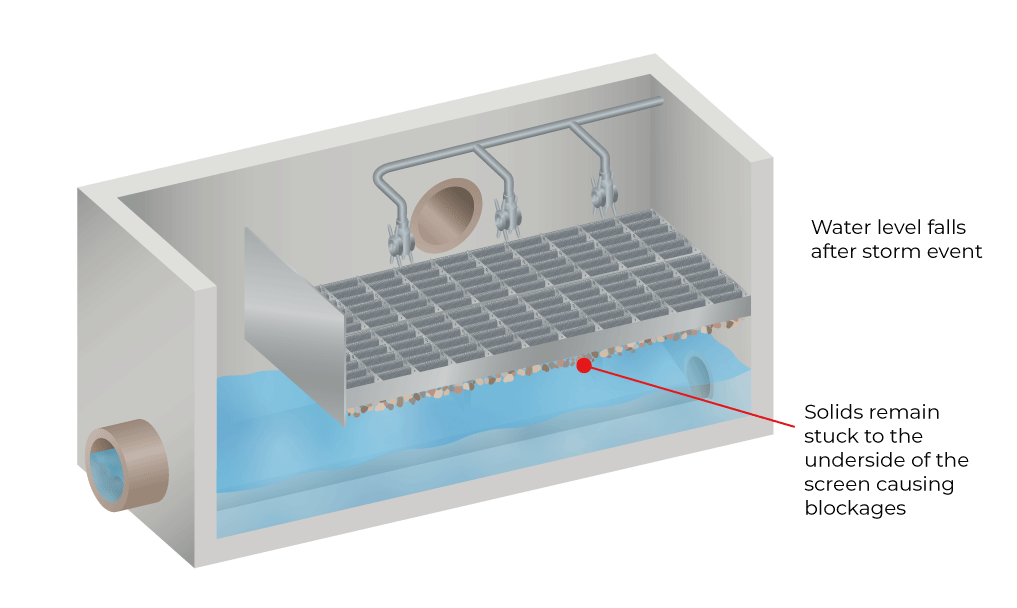
Not time‑sensitive: Because of logistical constraints, cleaning often cannot take place immediately after a storm—when debris is easiest to remove. Delays allow material to harden on the screen, making cleaning more difficult.
Fully Automated Cleaning
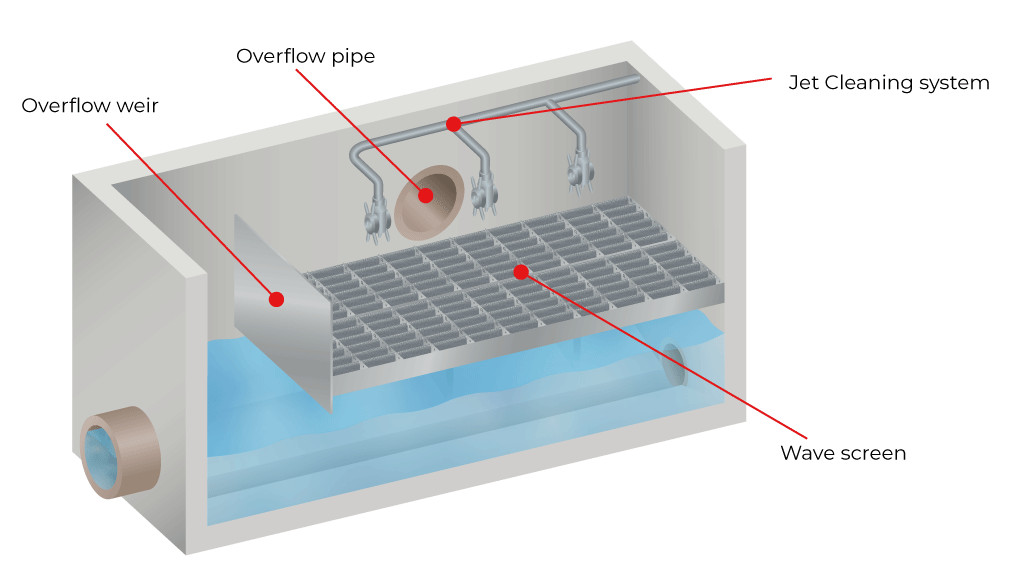
Fully automated systems use permanently installed washing nozzles or scrapers, activated by sensors that detect when cleaning is required. Typically, these systems include a wash‑water storage tank, pump, control valves, sensors, and a sequencing control panel.
PROS & CONS OF FULLY AUTOMATED CLEANING
High capital cost: Installation requires pumps, controls, and water infrastructure.
Low operating cost: Once installed, each clean costs very little.
Time‑sensitive: Automated systems can be triggered immediately after a storm, providing optimal cleaning conditions.
Utility challenges: Remote sites may lack power and clean water. Wash water cannot be drawn from the sewage system because it contains too many solids for effective jet cleaning.
Semi‑Automated Cleaning
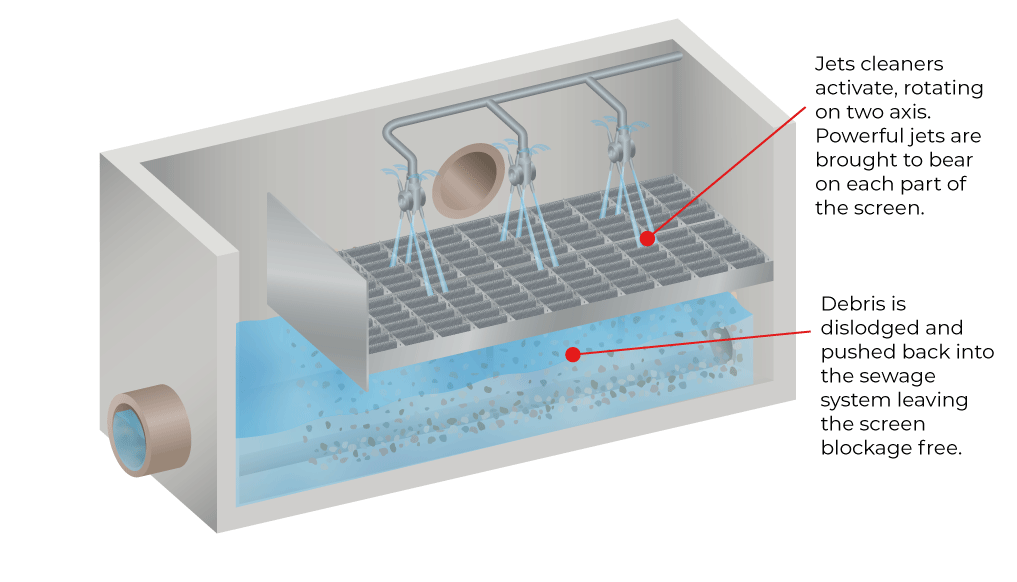
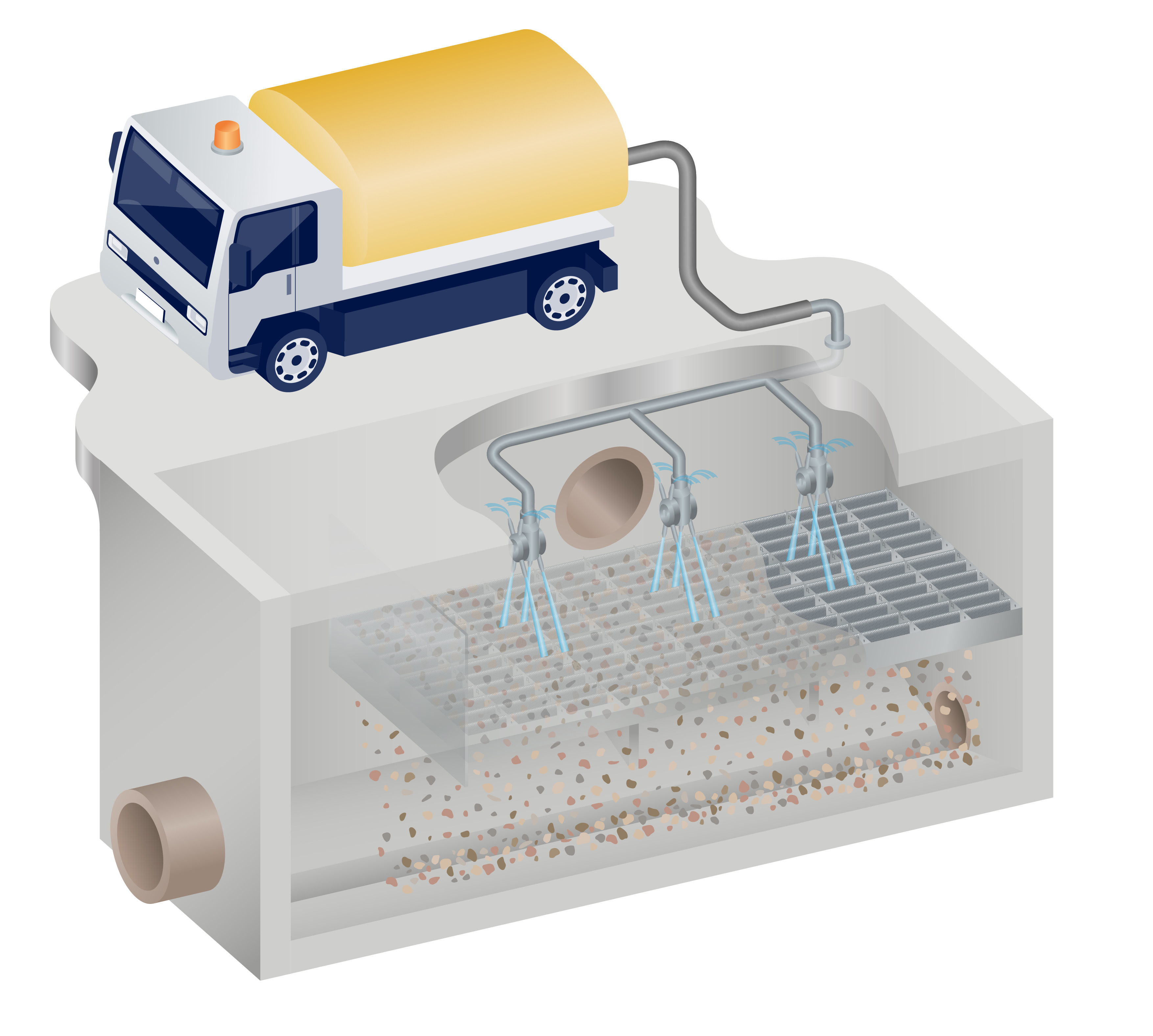
Semi‑automated systems also use installed jetting heads or scrapers, but they require a site visit to operate. Workers connect a mobile bowser, start the cleaning cycle, wait for around ten minutes while the system runs, then disconnect and move on.
PROS & CONS OF SEMI-AUTOMATED CLEANING
Lower capital cost: No on‑site pump, controls, or water tank are required.
Medium operating cost: Personnel are still needed, but each site can be cleaned much more quickly—allowing significantly more screens to be maintained in the same timeframe.
Robust and reliable: With no on‑site electrical systems, these solutions are simple, durable, and require minimal maintenance.
Reasonably time‑sensitive: Though not as instant as a fully automated system, efficient planning makes it easy to clean soon after storm events.
Conclusions
Fully automated systems are ideal for large screens where water and power are available or can be installed without excessive cost.
Semi‑automated systems work well at remote sites with challenging infrastructure.
Manual cleaning should be a last resort, suitable only for very inaccessible locations or areas where bowser vehicles cannot reach.
Why Work with SNP
The Spray Nozzle People specialise in spray nozzles and tank‑cleaning equipment. While they do not supply complete CSO chambers or screens, they offer in‑depth expertise in nozzle selection and the design of cleaning systems across multiple industries, including food processing, pharmaceuticals, chemicals, and petrochemicals.
Their experience covers everything from small process equipment to large industrial vessels. Their Storm Blaster system is widely recognised as one of the most effective storm‑tank cleaning solutions available, and this knowledge has been successfully applied to screen‑cleaning challenges in the water industry.
SNP’s Screen Blaster system is a strong option for many screen types, and they offer a range of tools to suit different site conditions. They work collaboratively with clients to develop tailored, cost‑effective solutions for even the most complex cleaning requirements.