Air atomising nozzle spray systems
Air atomising nozzle spray systems represent one of the most versatile and precise methods for fluid application across industry. These systems achieve fine atomisation by using compressed air to break up liquid streams into controlled droplet patterns.
Understanding each component's function and proper selection criteria is essential for optimising system performance, ensuring reliability and achieving desired spray characteristics.
This comprehensive guide examines the critical components that comprise a complete air atomising spray system and provides practical guidance for component selection based on application requirements.
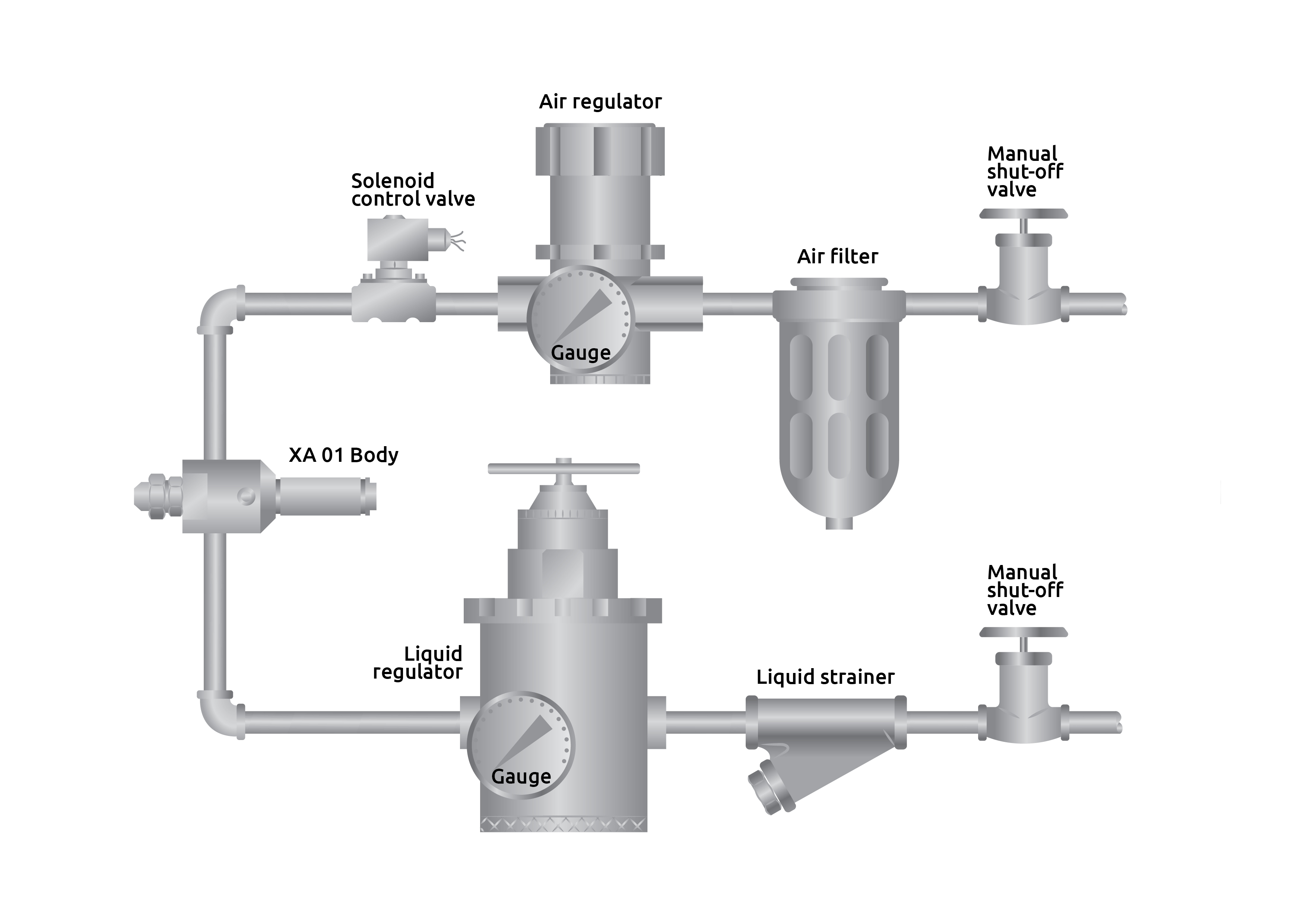
Core System Components
1. Air Atomising Nozzles
Function: The heart of the system, air atomising nozzles mix compressed air with fluid to create the desired spray pattern and droplet size distribution.
Types:
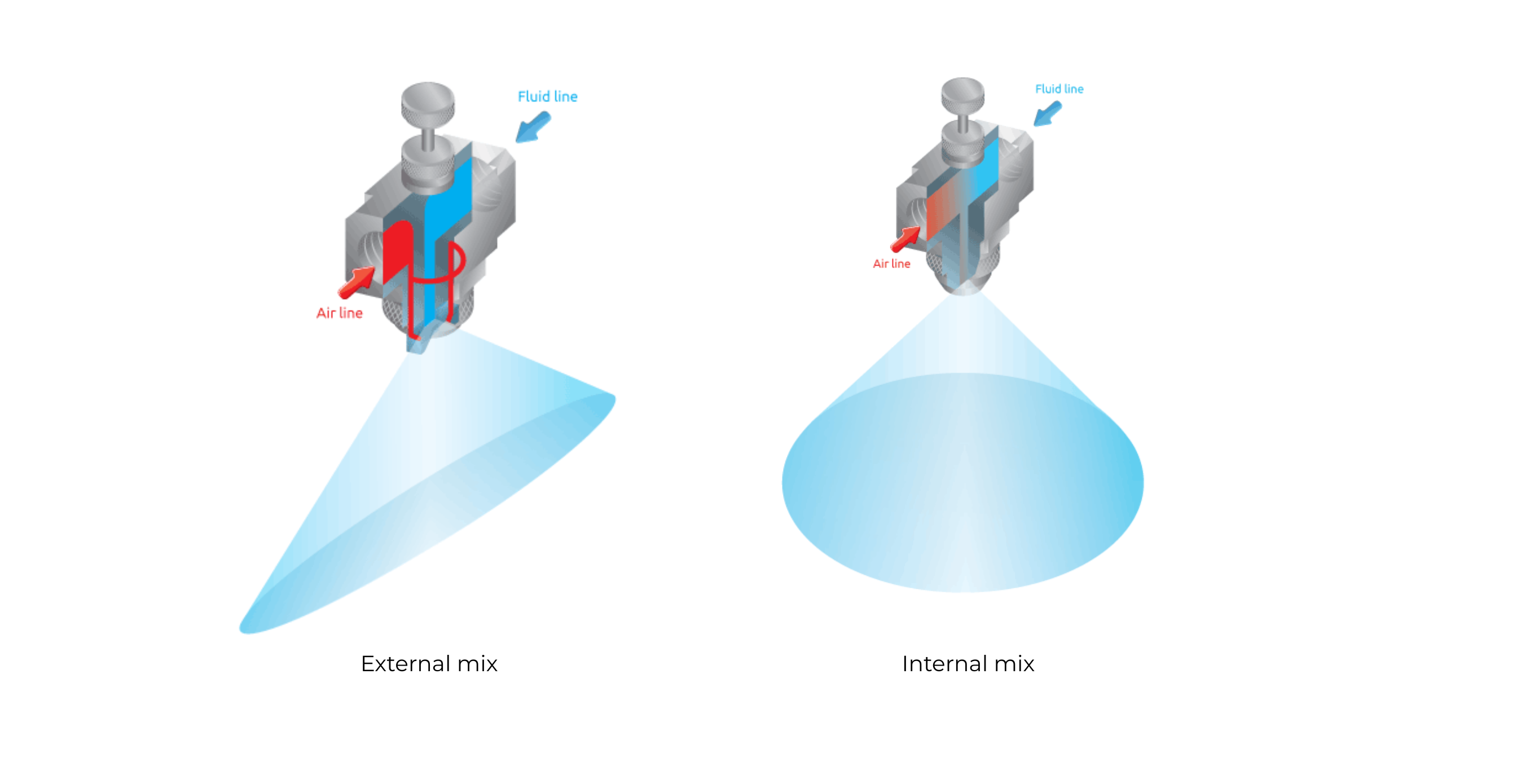
- Internal mix nozzles: Air and fluid combine within the nozzle body before exiting. Can achieve the smallest drop sizes.
- External mix nozzles: Air and fluid streams meet at the nozzle tip. Are easier to control and can spray more viscous fluids.
- Siphon feed nozzles: Utilise air velocity to draw fluid from a reservoir. Can achieve the lowest flow rates and do not require a liquid pump.
Selection Criteria:
- Flow rate requirements: Match nozzle capacity to application needs (typically 1-50 litres per hour)
- Spray pattern: Choose between full cone, hollow cone, or flat fan. Cone nozzle will achieve smaller droplet sizes and better fluid distribution, but fan nozzle will deliver accurate, well targeted sprays.
- Droplet size: Select based on desired Sauter Mean Diameter (SMD), typically 10-100 microns.
- Air-to-liquid ratio: Higher ratios produce finer atomisation but increase air consumption
- Material compatibility: Ensure nozzle materials resist corrosion from process fluids
- Operating pressure ranges: Verify compatibility with system pressure capabilities
- Mounting requirements: Consider thread sizes, orientations, and accessibility for maintenance
2. Fluid Delivery Pump
Function: Provides consistent, controllable fluid pressure and flow to the atomising nozzles.
Types:
- Positive displacement pumps: Gear, piston, or diaphragm pumps for precise flow control
- Centrifugal pumps: For high-volume, lower-precision applications
- Peristaltic pumps: Ideal for aggressive chemicals or when contamination prevention is critical
Selection Criteria:
- Flow rate capacity: Size 20-30% above maximum system demand
- Pressure capability: Must exceed maximum desired nozzle operating pressure plus system losses
- Fluid compatibility: Materials must resist chemical attack and maintain purity
- Viscosity handling: Ensure pump can handle fluid viscosity range. One of the advantages of air atomisers is that they can spray viscous fluids well but we need to ensure the supply pump can also.
- Turndown ratio: Ability to maintain performance across flow range (typically 10:1 or better)
- Pulsation characteristics: Consider dampening requirements for smooth spray patterns
- Maintenance requirements: Access for repairs, seal replacement, and cleaning procedures
3. Air Compressor
Function: Generates the compressed air supply necessary for atomisation and system operation.
Types:
- Rotary screw compressors: Continuous duty, oil-lubricated or oil-free variants
- Reciprocating compressors: Cost-effective for intermittent duty applications
- Centrifugal compressors: High-volume applications requiring oil-free air
Selection Criteria:
- Air volume requirements: Calculate total Nm3 / hr for all nozzles plus control system needs
- Operating pressure: Typically, 4-8 Bar for most atomising applications
- Duty cycle: Match compressor rating to operational schedule
- Air quality requirements: Oil-free air may be mandatory for food, pharmaceutical, or coating applications
- Reliability factors: Consider redundancy needs and maintenance schedules
- Energy efficiency: Evaluate variable speed drives and load management systems
- Installation requirements: Space, ventilation, noise considerations, and utility connections
4. Air Filters
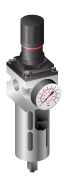
Function: Remove contaminants from compressed air to prevent nozzle clogging and ensure consistent spray quality.
Components:
- Particulate filters: Remove solid particles (typically 5-40 micron rating)
- Coalescing filters: Remove oil and water aerosols (0.01-1 micron rating)
- Activated carbon filters: Remove oil vapours and odours
Selection Criteria:
- Filtration efficiency: Match to air quality requirements and nozzle orifice sizes
- Flow capacity: Size for maximum system airflow with acceptable pressure drop
- Operating conditions: Consider temperature, pressure, and humidity ranges
- Maintenance intervals: Balance filtration efficiency with service frequency
- Differential pressure monitoring: Include gauges or switches for maintenance indication
- Housing materials: Ensure compatibility with operating environment
- Drain systems: Automatic vs. manual condensate removal based on duty cycle
5. Fluid Filters
Function: Remove particulates and contaminants from process fluids to prevent nozzle wear and maintain spray quality.
Types:
- Strainer baskets: Coarse filtration (40-100 mesh) for large particles
- Cartridge filters: Medium filtration (10-50 micron) for general applications
- Membrane filters: Fine filtration (0.1-10 micron) for critical applications
Selection Criteria:
- Filtration level: Typically 10x smaller than smallest nozzle orifice
- Flow capacity: Size for maximum system flow with minimal pressure drop
- Chemical compatibility: Materials must resist process fluid attack
- Temperature resistance: Consider operating and cleaning temperature ranges
- Pressure rating: Must exceed maximum system operating pressure
- Maintenance accessibility: Easy cartridge replacement and housing cleaning
- Bypass provisions: Consider automatic bypass for emergency operation
6. Air Solenoid Control Valves
Function: Provide rapid, precise on/off control of compressed air to individual nozzles or nozzle groups.
Types:
- 2-way valves: Simple on/off control
- 3-way valves: On/off with exhaust for rapid air evacuation
- Proportional valves: Variable flow control for spray modulation
Selection Criteria:
- Flow capacity (Cv): Must handle required airflow without excessive pressure drop
- Response time: Critical for applications requiring rapid cycling
- Pressure rating: Must exceed maximum system operating pressure
- Electrical requirements: Voltage, power consumption, and control signal compatibility
- Environmental rating: IP rating appropriate for installation conditions
- Valve construction: Pilot-operated vs. direct-acting based on pressure and flow requirements
- Fail-safe operation: Normally open vs. normally closed based on safety requirements
7. Fluid Pressure Regulators
Function: Maintain consistent fluid pressure to nozzles despite variations in pump output or system demand.
Types:
- Spring-loaded regulators: Simple, cost-effective for stable conditions
- Pilot-operated regulators: Superior performance under varying flow conditions
- Electronic pressure controllers: Precise control with remote monitoring capabilities
Selection Criteria:
- Pressure range: Adjustable range must encompass operating requirements
- Flow capacity: Size for maximum system flow without pressure droop
- Pressure stability: Consider droop characteristics under varying flow conditions
- Response time: Important for applications with rapid flow changes
- Materials compatibility: Wetted parts must resist process fluid attack
- Temperature compensation: Maintain accuracy across operating temperature range
- Gauge provisions: Include pressure indication for monitoring and setup
8. Air Pressure Regulator
Function: Reduce and control compressed air pressure from the compressor to optimal levels for atomising nozzles.
Types:
- General service regulators: Standard applications with moderate accuracy requirements
- Precision regulators: High accuracy applications requiring tight pressure control
- High-flow regulators: Large volume applications with minimal pressure drop
Selection Criteria:
- Inlet pressure range: Must handle compressor output pressure variations
- Outlet pressure range: Adjustable range must cover nozzle requirements (typically 10-100 PSI)
- Flow capacity: Size for total system airflow without pressure droop
- Pressure accuracy: ±2% typical for general applications, ±0.5% for precision work
- Relieving vs. non-relieving: Relieving types reduce outlet pressure when input increases
- Gauge ports: Include pressure indication for setup and monitoring
- Environmental protection: Consider temperature, humidity, and contamination exposure
9. Spray Bar Assembly
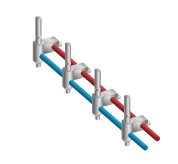
Function: To mount the air atomising nozzles in the desired positions and to distribute the air and fluid supply lines in an efficient way
Types:
- Single individual nozzle air feeds (parallel feed)
- Multiple nozzles from a single air feed (series air feed)
- Twin air feed for separate shut off control and atomisation air lines at different pressures
Selection criteria:
- Layout of desired overall combined spray pattern
- If different pressures are required for shut off and atomisation
- Number of nozzles required
- Whether nozzles need to be individually controlled
System Integration Considerations
Pressure Relationships
Proper system design requires understanding the pressure relationships between components. Air pressure typically ranges from 5-8 BAR, while fluid pressure may vary from 0.5-4 BAR. depending on the nozzle design and application requirements.
Flow Balancing
The liquid-to-air ratio significantly impacts spray characteristics. Typical ratios range from 1:1 to 20:1 by mass flow, with higher ratios of air producing finer atomisation at the cost of increased air consumption. So, a 1:1 liquid to air ratio would
produce very fine droplets but the same nozzle with a 10:1 liquid to air ratio would produce bigger droplets. Generally speaking, much below 1:1 and above 10:1 ratios will not produce stable sprays.
Control System Integration
Modern spray systems often incorporate programmable logic controllers (PLCs) to coordinate timing, pressure control, and safety functions. Consider digital pressure transducers and flow meters for feedback control and process monitoring.
Maintenance Planning
Design systems with maintenance accessibility in mind. Include isolation valves, drain points, and cleaning connections. Establish preventive maintenance schedules based on component specifications and operating conditions.
Conclusion
Successful air atomising spray system design requires careful consideration of each component's capabilities and limitations. Proper component selection ensures optimal spray quality, system reliability and operational efficiency. Regular maintenance
and monitoring of all system components is essential for maintaining peak performance and preventing costly downtime.
Understanding the interplay between components allows system designers to optimise performance for specific applications while maintaining the flexibility to adapt to changing requirements. Investment in quality components and proper system design pays
dividends through improved product quality, reduced maintenance costs and enhanced operational reliability.