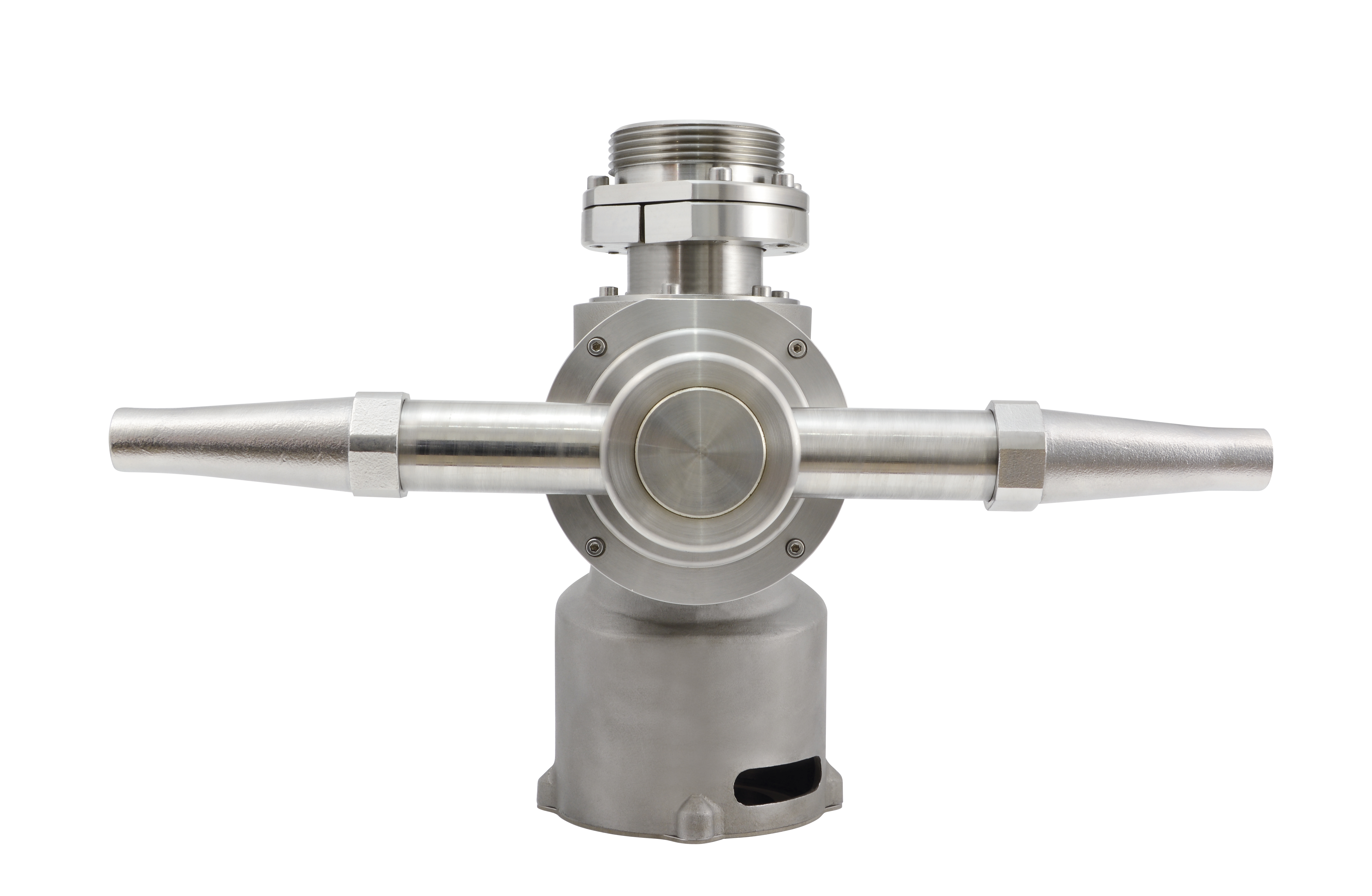
Many engineers want reassurance that the StormBlaster™ rotary jet cleaning system will perform reliably in storm tanks. Although the system has a long and successful track record in the industry, some scepticism still arises. This uncertainty is understandable and can largely be explained by the history of similar technologies.
Lack of Familiarity in the Water Industry
Rotary jet cleaning technology is not commonly used within the water industry. Engineers working in sectors such as food, beverage, chemical or petrochemical processing are very familiar with rotary jet cleaners, which have been used for many years and are considered the gold standard for cleaning large tanks. In the water industry, however, tank cleaning represents only a very small proportion of operational activity and has not historically been a major focus. This lack of exposure naturally contributes to ongoing scepticism.
Failures of Earlier Adaptations
Attempts made more than a decade ago to use factory‑type rotary jet cleaners in storm tanks were largely unsuccessful. These systems were designed for clean, controlled environments such as food factories. When placed in storm tanks, they encountered issues including contaminants clogging mechanical parts and general reliability problems. Equipment that performs well in a warm, clean indoor environment is not necessarily suited to harsh outdoor conditions where units are exposed to the elements year‑round. As a result, early attempts to shoehorn factory‑designed cleaners into storm tank applications failed to deliver reliable results.
Why the StormBlaster™ System Is Different
The StormBlaster™ system was specifically designed to address the shortcomings of those earlier attempts. Rather than adapting technology from the food industry, the StormBlaster™ is based on marine tank cleaning systems originally used to clean oil tankers. These systems were designed to handle high levels of particulate matter and operate in tough, outdoor environments. Because the operating conditions of marine tank cleaning are far closer to those found in storm tanks, the StormBlaster™ is inherently more robust and reliable.
Problems with Early Cleaning Protocols
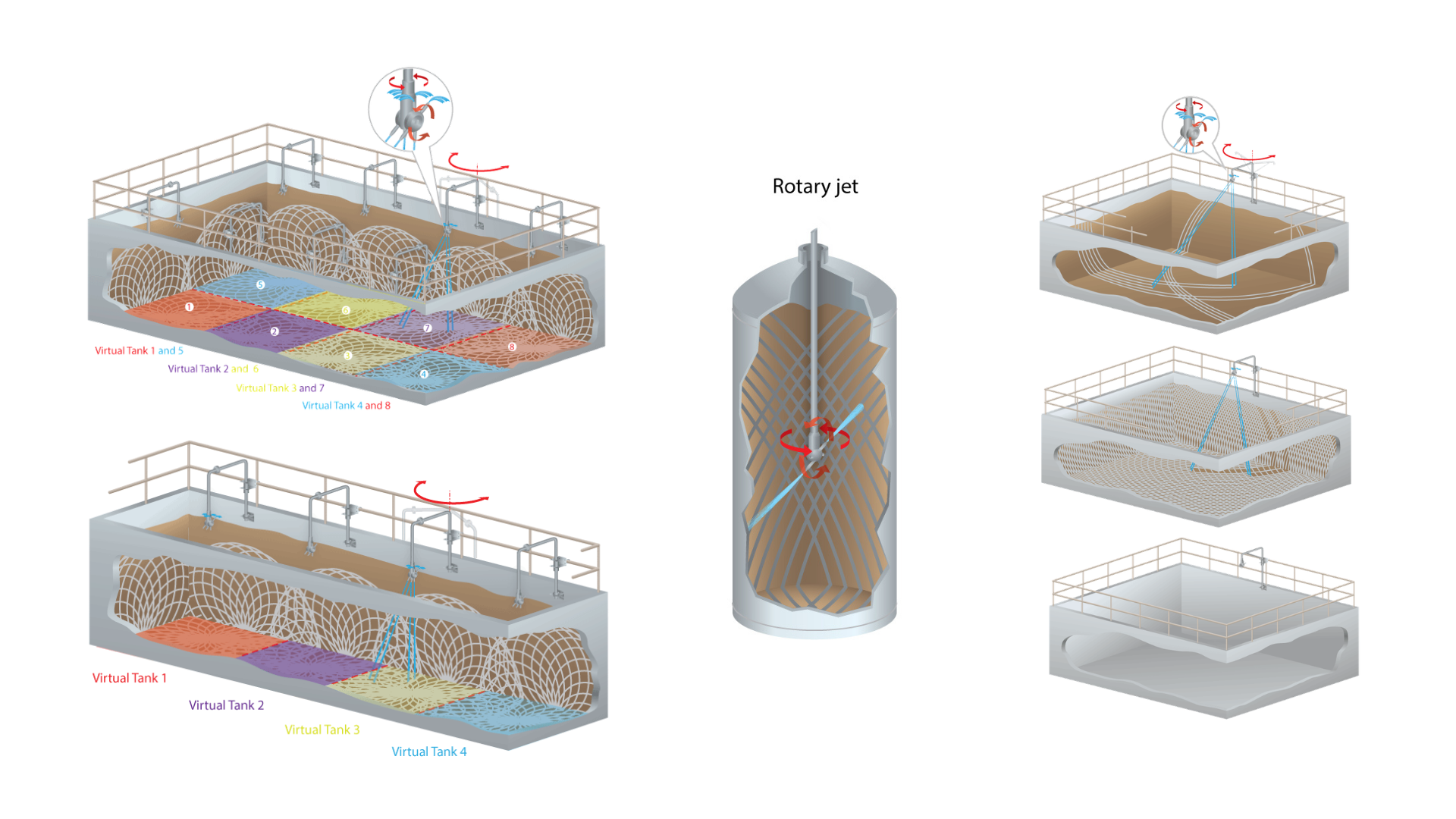
A further cause of previous failures was the use of inappropriate cleaning protocols. The methods used to clean industrial tanks in factories cannot simply be applied to storm tanks. Storm tanks differ greatly in shape, size and layout. Designing an effective system requires specialist understanding of tank cleaning, taking into account the geometry of each tank, the number of cleaners required, the flow rates needed and the jet lengths necessary to reach all internal surfaces. Earlier projects often assumed that what worked in a distillery or food‑processing plant would work in a storm tank, but the differences between the environments meant this approach was ineffective.
Development of Correct Protocols
Over the last eight years, the correct protocols have been developed specifically for storm tank cleaning. These include determining the appropriate positioning of the tank cleaners, the number required for each installation and the flow rates needed to deliver effective cleaning. These protocols have been built on extensive field experience and have consistently produced reliable results.
Proven Performance Across the UK and Europe
There are now around 130 StormBlaster™ units successfully operating across the UK, Ireland and France. They are used in a wide variety of storm tanks and continue to perform effectively in different layouts and environmental conditions. The technology is well proven, and the systems have established a strong track record of reliability.
Conclusion
Initial scepticism about the StormBlaster™ system is understandable. The technology is not widely used in the water industry, and earlier attempts using unrelated systems created lingering doubts. However, the StormBlaster™ system is based on robust marine cleaning technology and supported by the correct engineering protocols. After eight years of successful operation in many different installations, it has demonstrated its ability to clean almost any storm tank effectively. It is now the most efficient and reliable method available for cleaning stormwater attenuation tanks.