Stormwater attenuation tanks are essential for preventing sewage overflows during periods of heavy rainfall. Two automated systems are widely used to clean these large tanks: tipping buckets and the StormBlaster™ rotary jet cleaning system. Although both are designed to remove residue after a tank has emptied, they operate very differently and deliver varying levels of performance. This article compares the two approaches across the six main challenges associated with stormwater tank cleaning.
How Tipping Buckets Work
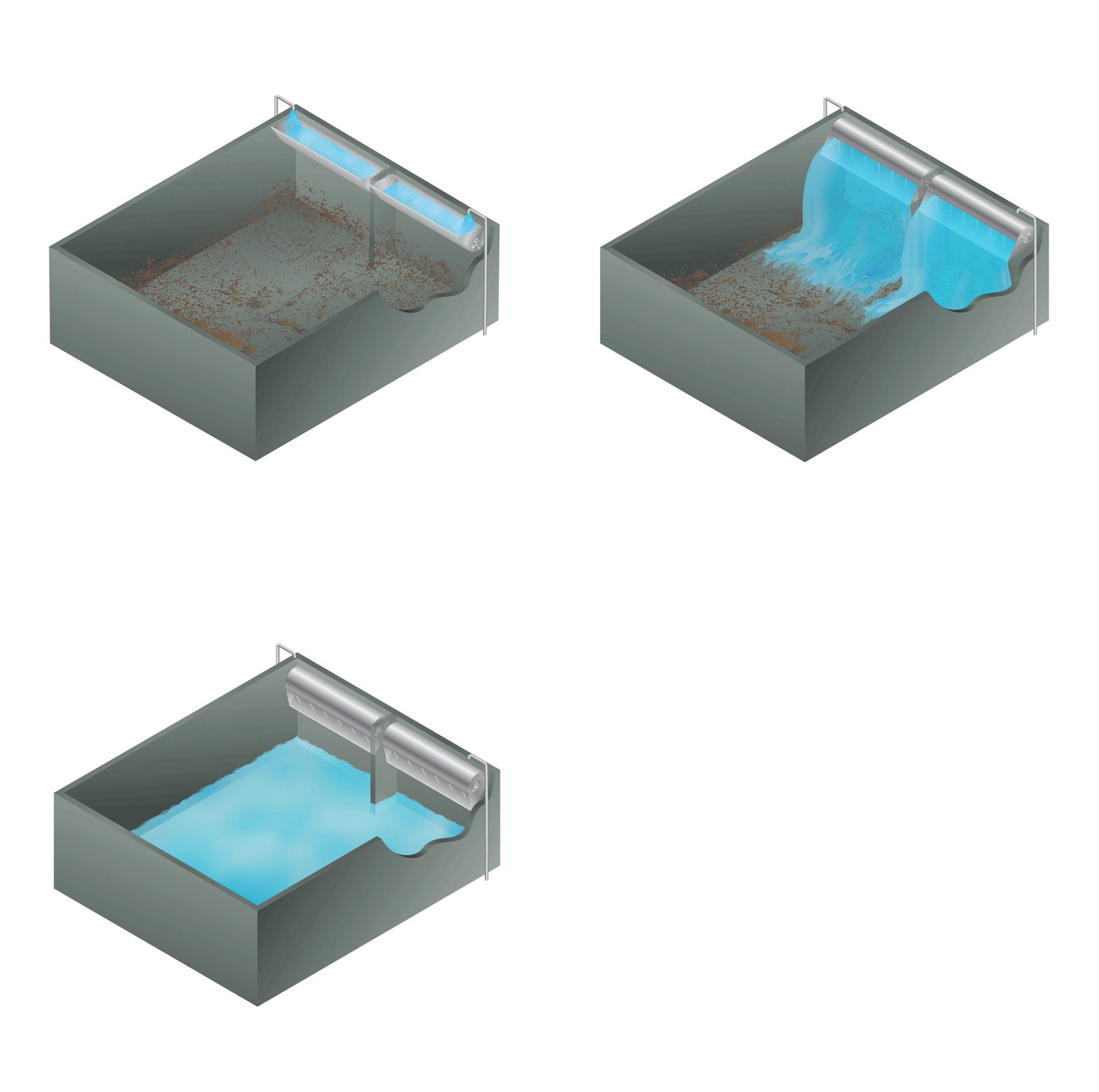
Tipping bucket systems clean a storm tank by releasing large amounts of water in a single tipping motion. The resulting surge flows across the tank floor, washing away sediment and residue. This method relies on volume and momentum to achieve its cleaning effect.
How the StormBlaster™ System Works
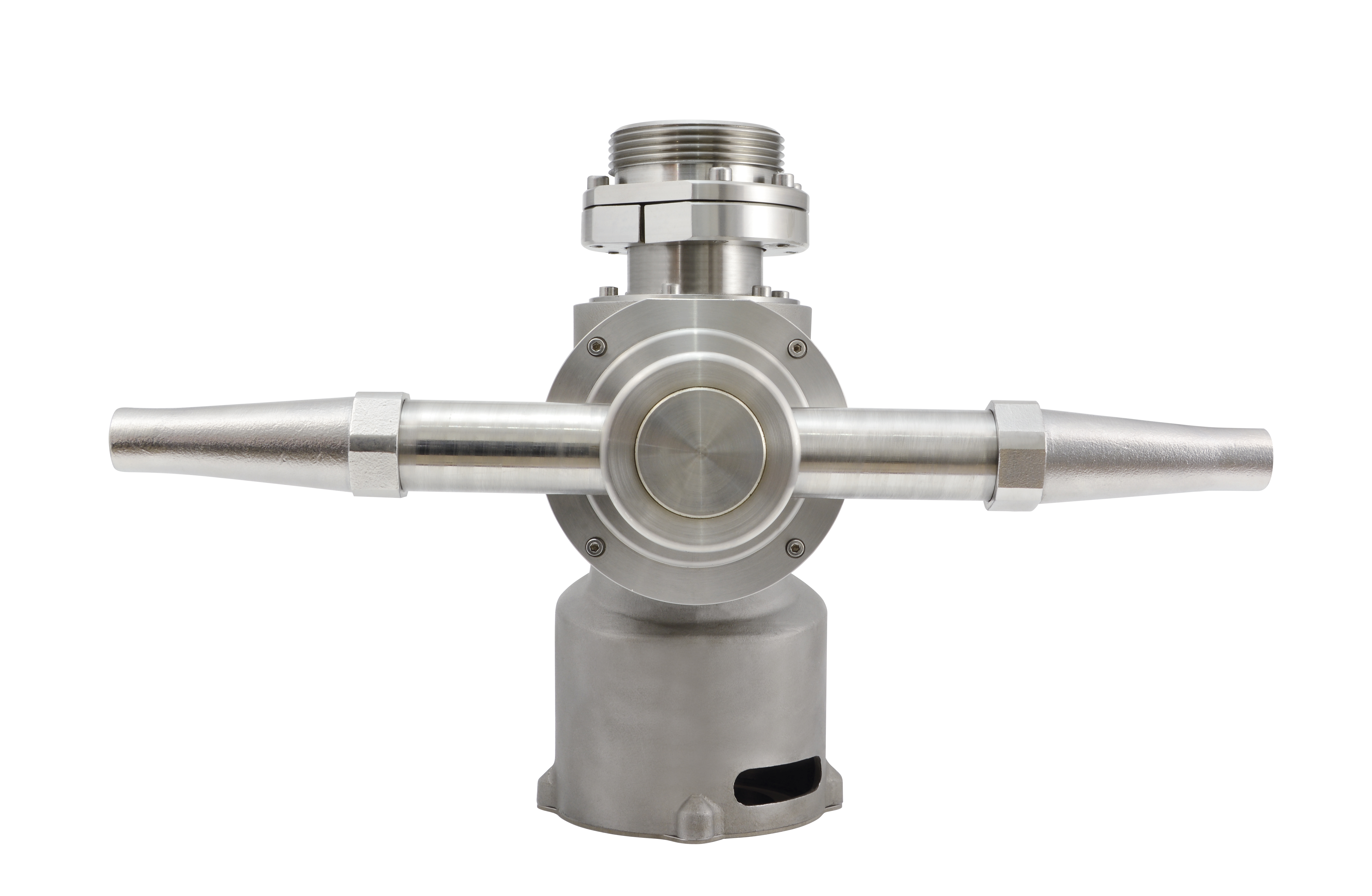
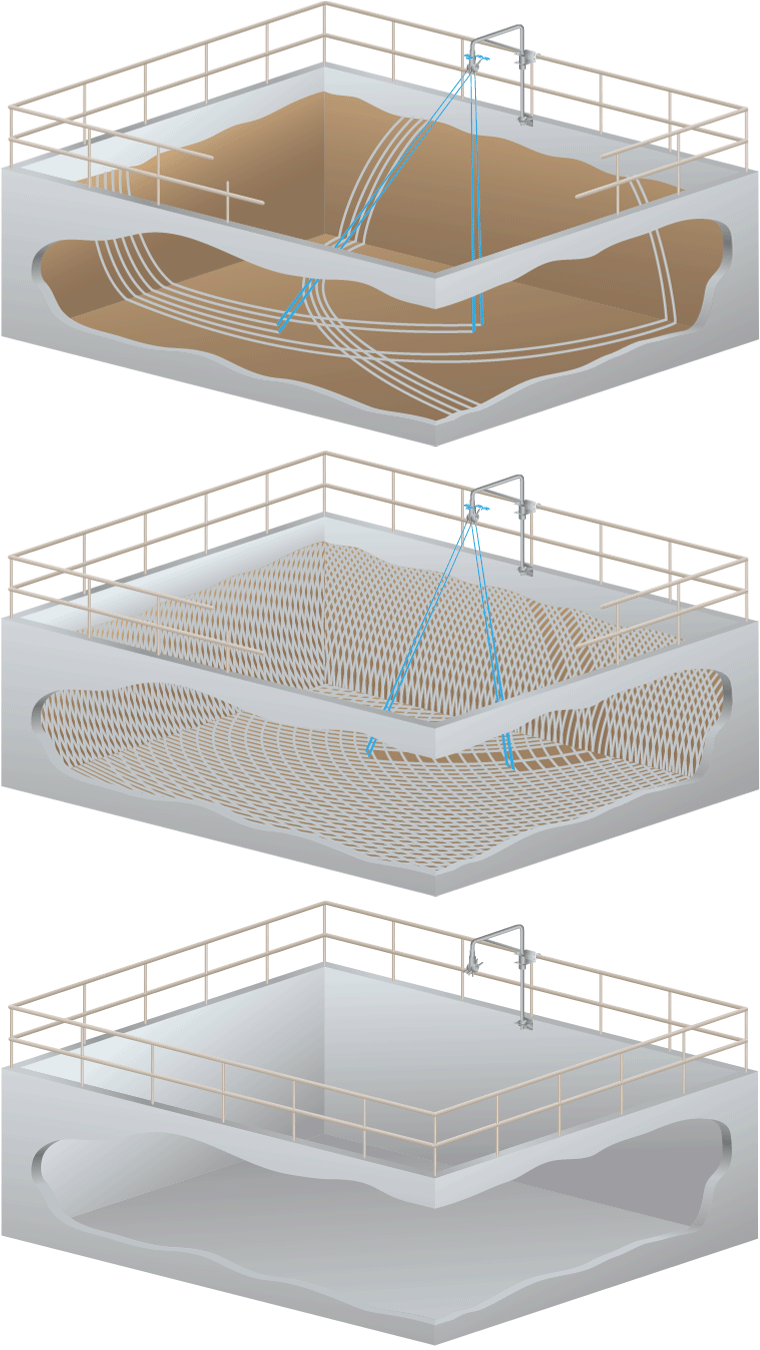
The StormBlaster™ uses rotary jet technology originally developed for cleaning marine oil tankers. Water is delivered to the cleaning head at around eight to ten bar pressure, causing it to rotate on two axes. This ensures complete coverage of all tank surfaces during a controlled cleaning cycle. After extensive trials with major UK water companies, more than 130 units are now in use across the UK, Ireland and France.
Health and Safety
Both the tipping bucket system and the StormBlaster™ reduce the need for personnel to enter the tank, which lowers the risks associated with manual cleaning. Health and safety requirements for manned entry are demanding and costly, so automated systems offer clear advantages.
Harsh Environmental Conditions
Stormwater tanks are outdoors and exposed to the elements all year round. Tipping buckets are built to be strong and durable, while the StormBlaster™ is naturally robust due to its origins in the marine industry. Its sealed, fluid‑driven gearing requires no external power source and is protected from weather and contaminants, making it well suited to remote and demanding sites.
Water Quality
Tipping buckets operate effectively with non‑potable water or final effluent, which are commonly used for tank cleaning. The StormBlaster™ also performs well with poor‑quality water because its internal gears are sealed and protected from debris. Unlike other rotary jet cleaners used in industries such as food processing, the StormBlaster™ does not require high‑quality water to function reliably. It was originally designed to handle sludge and particulate‑rich liquids found in marine environments.
Water Usage
Water efficiency is important in managing cost and reducing waste. Tipping bucket systems consume large volumes of water to produce their cleaning wave. The StormBlaster™, however, uses far less water thanks to its targeted cleaning action, where high‑impact jets directly remove residue from tank surfaces. Rotary jet cleaners can be up to ninety percent more efficient than other methods, making the StormBlaster™ significantly more economical.
Retrofitting Challenges
Retrofitting tipping bucket systems can require major changes to the tank structure, such as adding channels or altering gradients. Tanks not originally designed for tipping bucket systems may also suffer from backwash and redepositing of residue. The StormBlaster™ requires minimal modification and has been installed successfully even in shallow tanks with poor gradients. If redepositing occurs, the system can simply run additional cycles using the same water.
Cleaning Large Tanks
Large storm tanks can be difficult to clean using tipping buckets because sourcing a large enough bucket can be challenging, and additional modifications may still be required. The StormBlaster™ offers far greater flexibility. Different nozzle sizes can achieve jet lengths of up to 25 metres, and two to six units can be installed for very large tanks. A defined sizing methodology ensures the correct number of StormBlaster™ units is used, with the capability to clean tanks as large as Olympic swimming pools.
Conclusion
When compared across all six challenges, the StormBlaster™ system consistently outperforms tipping buckets. It is more efficient, easier to retrofit, more robust and better suited to large and complex tank designs. While tipping buckets may be appropriate in specific situations, the StormBlaster™ provides superior cleaning performance and long‑term reliability for modern stormwater attenuation tanks. If you are experiencing difficulties with storm tank cleaning, our specialists are ready to assist.