In this guide, we look at:
- Why you should keep spare spray nozzles on site?
- How worn or damaged nozzles can affect product quality
- The role of spare nozzles in reducing downtime and waste
- Planning nozzle replacement and maintenance
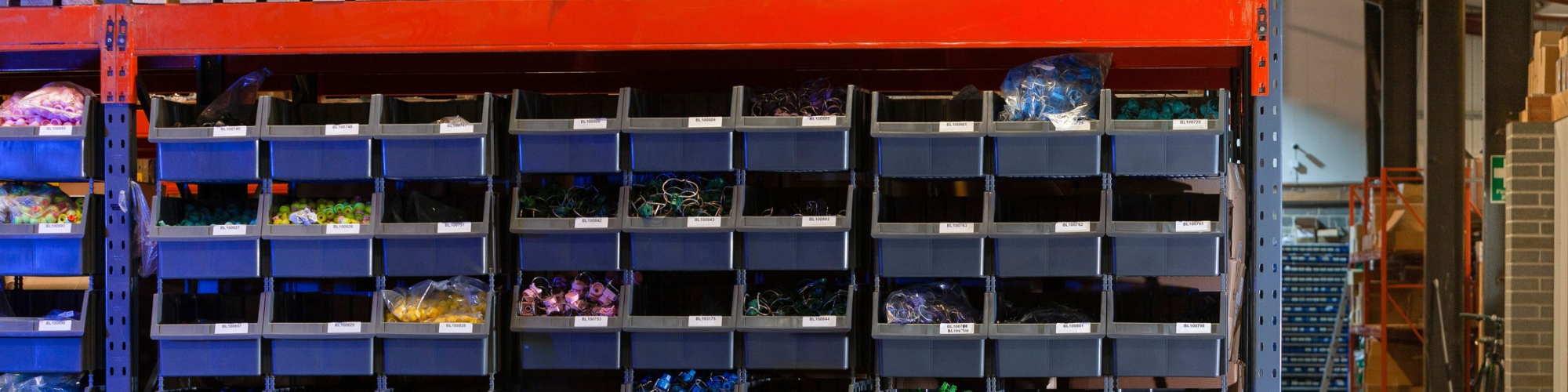
- Which spare nozzles to keep and how to store them
A spray nozzle is often a small part of a much larger system. But if it becomes worn, blocked or damaged, the effect on that system can be disproportionately damaging.
This guide explains why keeping spare nozzles makes good sense and what to consider when building your spares stock.
1. PROTECT PRODUCT/PROCESS QUALITY
Nozzles do not always fail suddenly. Wear can gradually change the orifice and internal surfaces, affecting flow rate, spray distribution and drop size. Because this happens over time, it can be easy to miss. The system is still spraying, but it may no longer be delivering the results it was designed to achieve.
An uneven spray can leave products inadequately coated, moistened, cooled or whatever the desired outcome is. For cleaning applications, cleaning or disinfecting may be inadequate. Applying too much or too little spray media means you can end up with rejected batches or contaminated products.
Keeping spare nozzles on site means you can replace a worn or damaged nozzle as soon as the problem is identified, rather than risk further production while waiting for a replacement. Regular checks are essential too: by the time a fault shows up in the finished product, the damage may already be done. Inspect nozzles regularly (see our Troubleshooting Spray Systems guide to find out what to look out for) and compare their performance with the manufacturer’s specification (datasheet) at the correct operating pressure
2. REDUCE UNPLANNED DOWNTIME
If a damaged nozzle stops a process, finding and ordering a replacement becomes urgent. Identifying the part, checking availability and arranging delivery all take time.
Some nozzles are made to order, particularly where specialist materials or configurations are involved. The cost of waiting can quickly outweigh the cost of holding a spare.Identify the nozzles your process depends on and keep suitable replacements on site. For a critical spray bar, say, a complete spare set may be sensible while, for other systems, a smaller stock of commonly used nozzles may be enough.
The right quantity depends on finding a balance between how many nozzles you use, how quickly they wear and how long replacements might take to obtain.
3. AVOID WASTING WATER, CHEMICALS AND ENERGY
A worn nozzle can pass more liquid than intended at a given pressure. Across a spray bar, small increases at individual nozzles can add up.If that liquid contains a cleaning chemical, coating or other treatment, the additional consumption costs more than water alone. Depending on the process, there may also be extra pumping, heating, drainage or effluent treatment costs.
Make checking nozzle condition part of your running-cost checks. A nozzle that still produces a spray is not necessarily operating efficiently and keeping replacements to hand makes it easier to change worn components before unnecessary consumption becomes an accepted part of operating the system.
4. MAKE CLEANING AND MAINTENANCE EASIER
A blocked nozzle may only need cleaning but cleaning can take time, particularly where deposits need soaking in a suitable solution. Without a spare, there can be pressure to get the nozzle back into service quickly. That is when someone may be tempted to clear the orifice with wire or another sharp object, potentially damaging a precision component.
If you have a spare, you can take the dirty nozzle away for proper cleaning and inspection without worrying about getting it back in service immediately. Once checked, a serviceable nozzle can return to the spares stock. Keep it clearly separated from any parts awaiting inspection.
5. AVOID A LAST-MINUTE SUBSTITUTE
When production is waiting, a nozzle that is “close enough” can become tempting. But matching the thread size alone does not make it a suitable replacement.
Spray pattern, angle, flow rate, material and operating pressure all affect performance. So, record the full part number and specification for each nozzle position. Label your spares so that maintenance staff can identify the correct replacement without having to work backwards from a worn or damaged component. If several similar nozzles are used across the site, clear identification is particularly important.
What spare nozzles should you keep?
Start with the systems where a nozzle problem would have the greatest effect. Check:
- The full nozzle specification and quantity installed
- Normal wear rates and maintenance history
- Supplier lead times
- Whether a complete set or individual replacements are needed
- If any seals, gaskets or retaining parts are required for the changeover
Store spares in a clean, dry and protected space. Follow the manufacturer’s storage guidance, particularly for assemblies containing seals or other components with storage limits.
Review the stock whenever the system specification changes. A spare is only useful if it is still the right spare.
Plan the replacement before you need it
Keeping spare nozzles is a straightforward way to make maintenance more predictable. It helps you respond to damage, replace worn parts promptly and avoid extending a shutdown while you wait for delivery. Spare nozzles work best alongside regular inspection and correct maintenance. If the underlying problem is poor pressure, unsuitable filtration or chemical incompatibility, that needs attention too.
If you’re unsure which replacements to hold, please get in touch with our spray nozzle experts. We can help identify your existing nozzles and advise on suitable spares for your application.