In this article, we look at:
- How storm tank cleaning supports AMP8 wastewater projects.
- How cleaning requirements differ for corrugated stainless-steel and glass-fused-to-steel (GFS) storm tanks.
- How the StormBlaster™ uses high-impact rotary jets to dislodge silt, grit and other residual deposits.
- What to check when specifying a storm tank cleaning system, including jet coverage, mounting position, water supply and maintenance access.
- Why pre-installation trials can help verify cleaning performance and compatibility with the tank’s lining or coating.
How the StormBlaster™ Supports AMP8 Wastewater Infrastructure
Reliable, effective cleaning solutions for corrugated stainless-steel and Glass-Fused-to-Steel (GFS) storm tanks
Shoja Shokofan, The Spray Nozzle People, 2026
A New Era for Wastewater Infrastructure: Building Better Storm Tanks for AMP8 and Beyond
The wastewater industry in England and Wales is entering a defining period of investment and transformation. Under Asset Management Period 8 (AMP8), spanning April 2025 to March 2030, water companies are investing in infrastructure to reduce storm overflow discharges, protect the environment and build more resilient wastewater networks.
Ofwat’s £104 billion investment programme includes almost £12 billion dedicated to reducing storm overflow spills, with an ambition to reduce spills by approximately 45% by 2030 compared with 2021 levels. This unprecedented investment is driving the development of new stormwater storage capacity, the modernisation of existing assets and a fundamental shift towards more effective wastewater management.
NEW Stormtank Designs
As the industry responds to these challenges, the way storm tanks are designed and constructed is evolving. Alongside traditional concrete structures, corrugated stainless-steel and Glass-Fused-to-Steel (GFS) tanks offer alternative, modular approaches to delivering the additional storage capacity required to support AMP8 objectives. However, building more storage is only part of the solution. The long-term success of these assets also depends on how effectively they can be cleaned, maintained and kept ready for operation when the next storm arrives. Accumulated solids, sediment and residual wastewater can create significant maintenance challenges, making effective cleaning an essential consideration from the earliest stages of tank design.
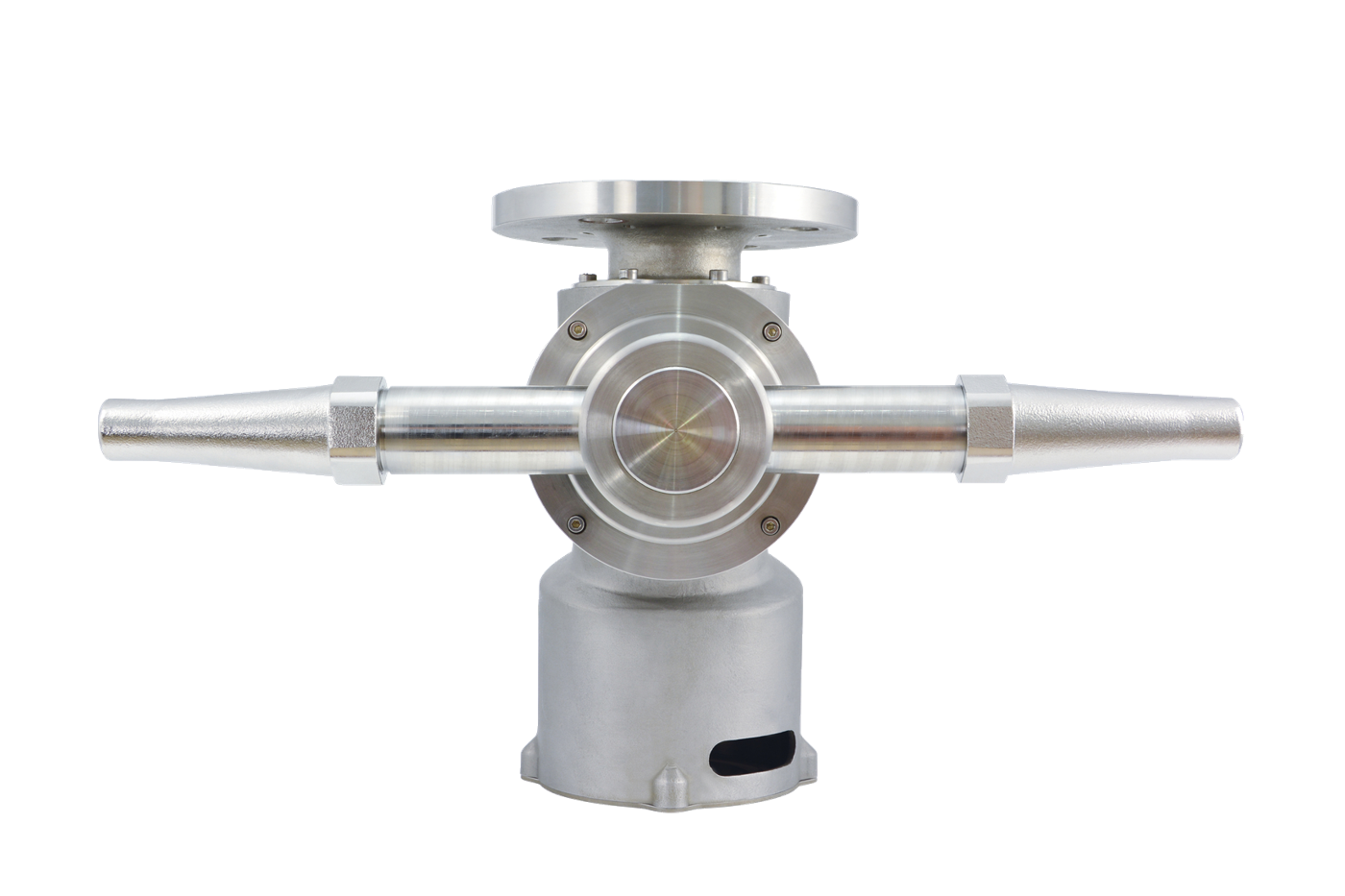
This is where the StormBlaster™ can make a difference. Its high-impact rotary jet cleaning action offers a practical solution for addressing the demanding cleaning requirements of large wastewater storage tanks. When correctly specified and integrated into the tank design, the system can help engineers develop effective cleaning strategies for both corrugated stainless-steel and GFS installations, with the configuration validated against the tank geometry, surface materials and operating requirements.
A more integrated approach to cleaning
As AMP8 drives the delivery of new infrastructure, the opportunity is to look beyond storage capacity alone and embrace a more integrated approach to tank design, cleaning and whole-life maintenance. By considering the StormBlaster™ at the design stage, water companies, consulting engineers and contractors can help create storm storage assets that are not only built to meet today's infrastructure demands but are also designed for effective maintenance, operational readiness and long-term performance.
Building more stormwater storage is only part of the job. Every asset also needs to be ready for use when needed.
Why Are Corrugated Stainless-Steel and GFS Storm Tanks Becoming Important?
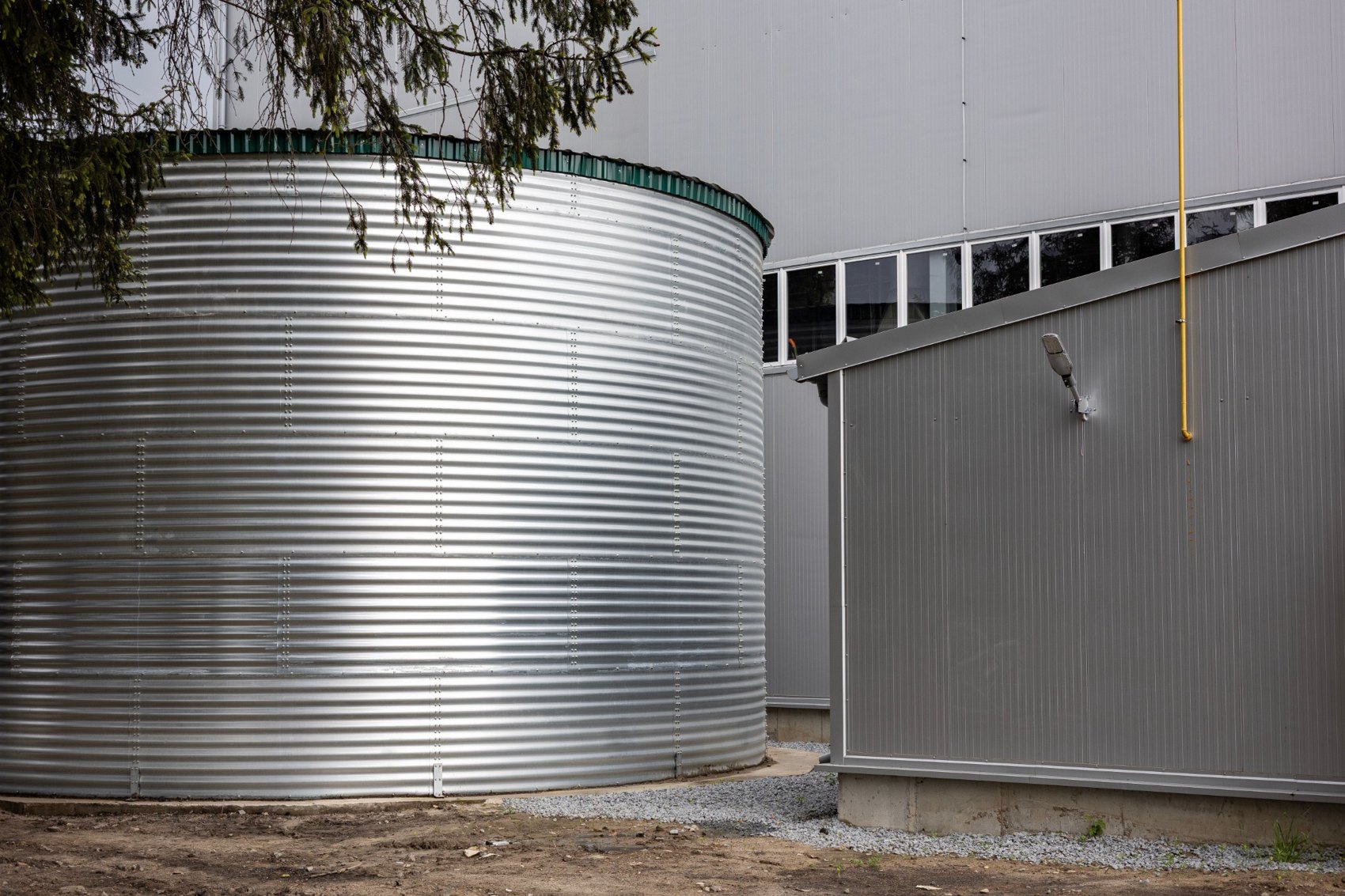
Corrugated stainless-steel and Glass-Fused-to-Steel (GFS) tanks offer modular approaches to stormwater storage, with prefabricated panels assembled on site to provide the capacity required by modern wastewater infrastructure projects. Depending on the design and application, these tank types can offer practical benefits in terms of installation, construction timescales, corrosion resistance and the delivery of large storage volumes, making them valuable options for water companies and engineering contractors working to meet AMP8 objectives.
However, their construction and internal surface characteristics introduce important considerations for effective tank cleaning. Corrugated stainless-steel walls create a profiled surface that the cleaning system must reach effectively, including areas where sediment and residual solids may accumulate. GFS tanks feature a protective glass coating, with panel joints, fittings and surface-integrity requirements that must be taken into account when selecting cleaning equipment. Where stainless-steel tanks incorporate additional protective liners or coatings, compatibility with the cleaning method is equally important.
For both tank types, effective cleaning must be considered from the design stage. The selected system should provide suitable coverage across the tank's internal surfaces while operating within the limits specified by the tank manufacturer. By integrating an appropriately configured StormBlaster™ rotary jet cleaning system into the tank design, engineers can develop a cleaning solution tailored to the tank's geometry, surface materials and operating requirements, helping support efficient maintenance and long-term operational readiness.
The Cleaning Challenge: Keeping Storm Tanks Ready for Service
Storm tanks operate under demanding conditions. During rainfall events, they may receive wastewater containing suspended solids, organic matter, silt, grit and other debris.
When the tank is emptied, residual material can remain on the floor, walls and other internal surfaces. If not adequately removed, these deposits may contribute to odour, hygiene concerns, maintenance requirements and reduced operational readiness.
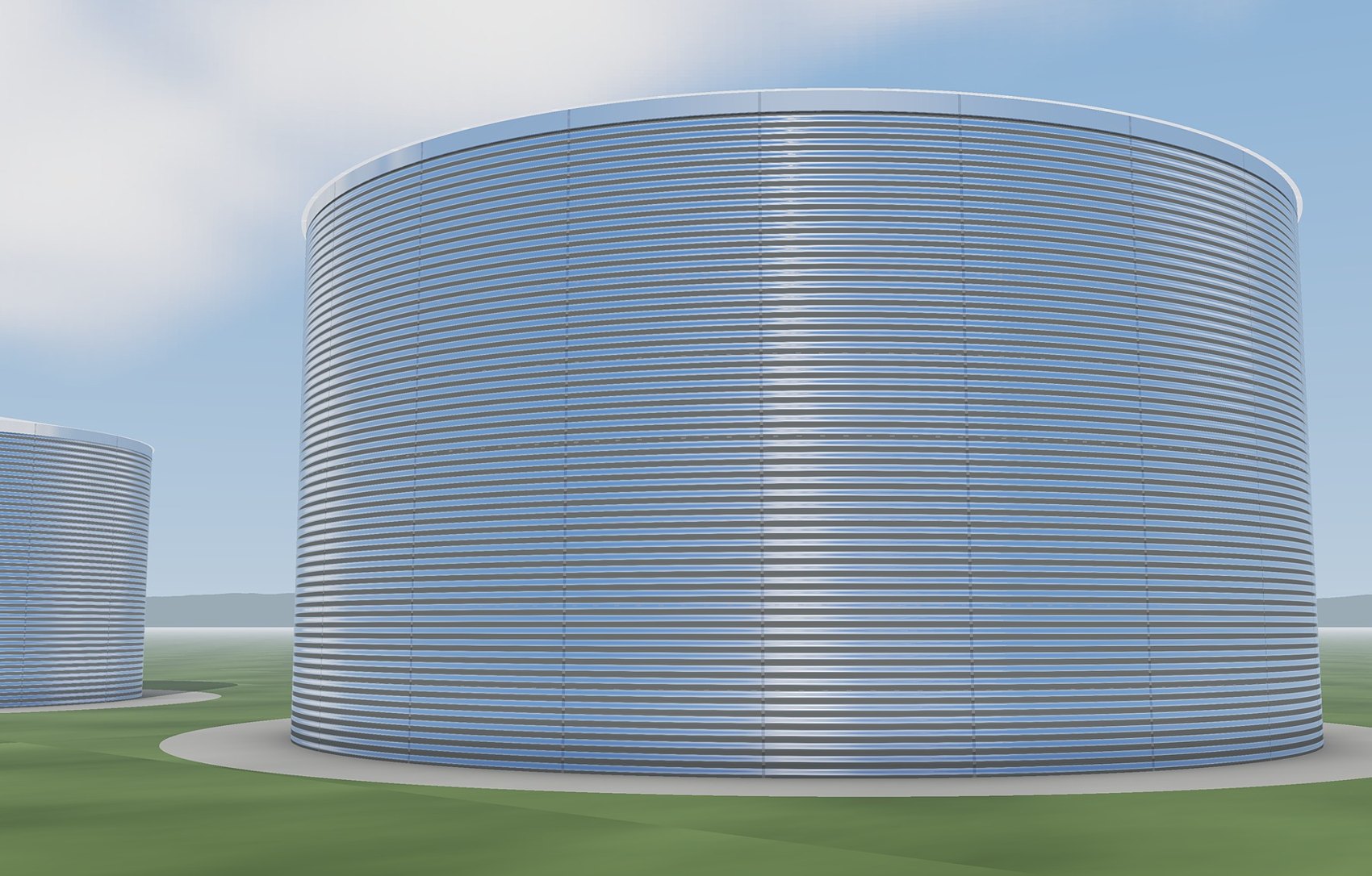
The challenge is particularly relevant to tanks with corrugated internal profiles, large diameters or complex geometries. A cleaning system must provide sufficient coverage and cleaning energy to address deposits across the tank, rather than simply rinsing the most accessible surfaces.
Traditional manual cleaning can require personnel to undertake time-consuming work in a potentially hazardous environment. Depending on the tank design and access arrangements, it may also involve confined-space considerations, additional equipment and operational downtime.
For water companies working to AMP8 delivery schedules, a well-designed tank-cleaning system can help support:
- Operational readiness: removing residual deposits to help prepare tanks for subsequent storm events.
- Maintenance efficiency: reducing reliance on manual intervention where automated cleaning is suitable.
- Environmental protection: supporting the reliable operation of storage assets designed to help manage storm flows.
- Whole-life asset management: incorporating cleaning performance, maintenance requirements and water consumption into the original design.
- Worker safety: potentially reducing the need for personnel to enter tanks for routine cleaning, subject to the overall system design and site procedures.
Automated cleaning does not eliminate all inspection or maintenance requirements, but it can form an important part of a planned asset-maintenance strategy.
StormBlaster™: Powerful Cleaning for Demanding Applications
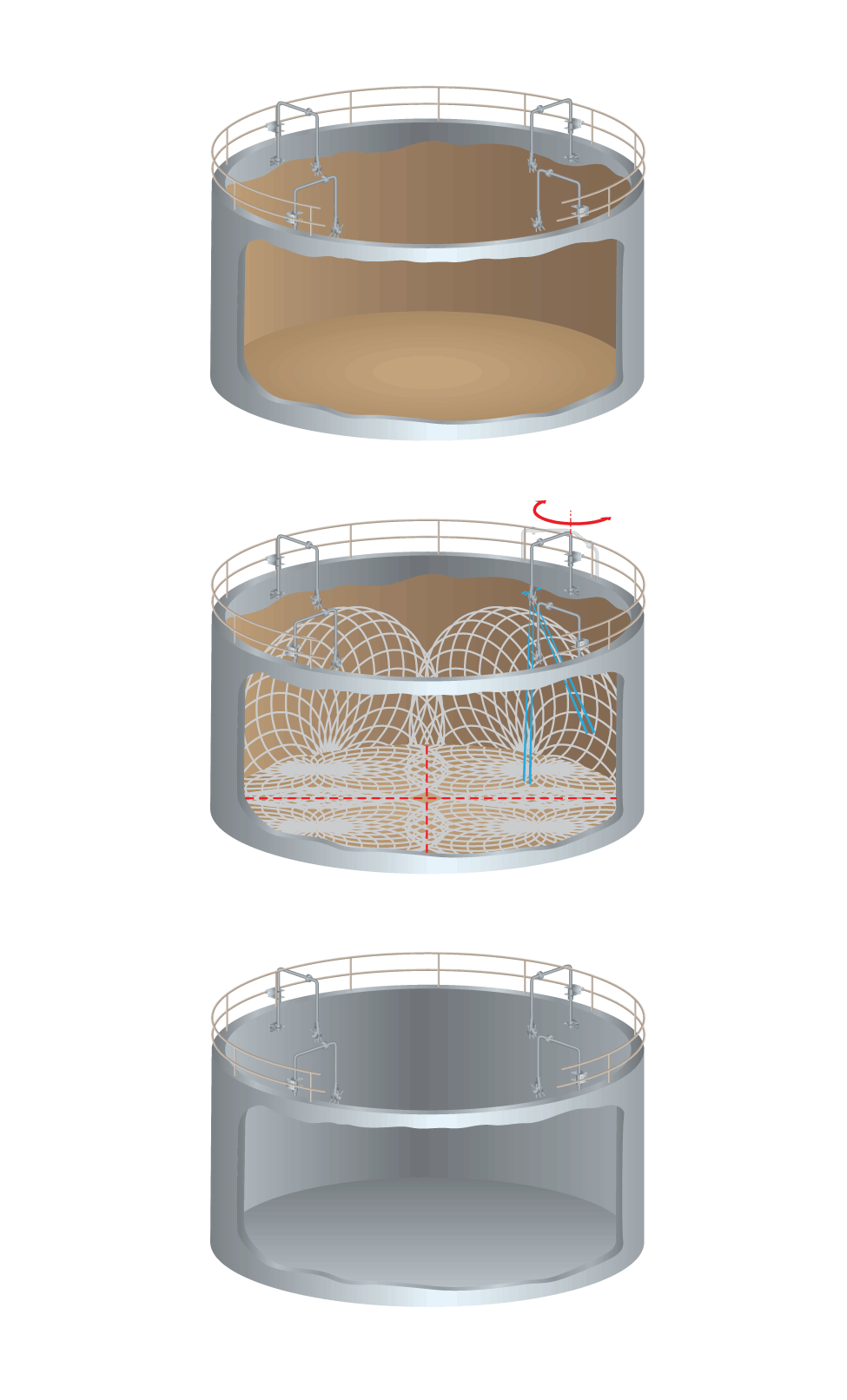
The StormBlaster™ uses rotating high-impact water jets to direct cleaning energy across internal tank surfaces.
This mechanical cleaning action makes the system particularly relevant where residual solids and accumulated deposits need to be removed from large storage structures.
High-impact cleaning action
The StormBlaster™ directs concentrated water jets towards the surfaces requiring cleaning. The impact of these jets helps dislodge deposits that may be difficult to remove using conventional rinsing alone.
Operating pressure, nozzle configuration, flow rate, installation position and cleaning-cycle duration can all influence the resulting performance. For wastewater applications, the system should therefore be selected and configured according to the expected nature of the deposits and the required cleaning outcome.
Designed for large storage volumes
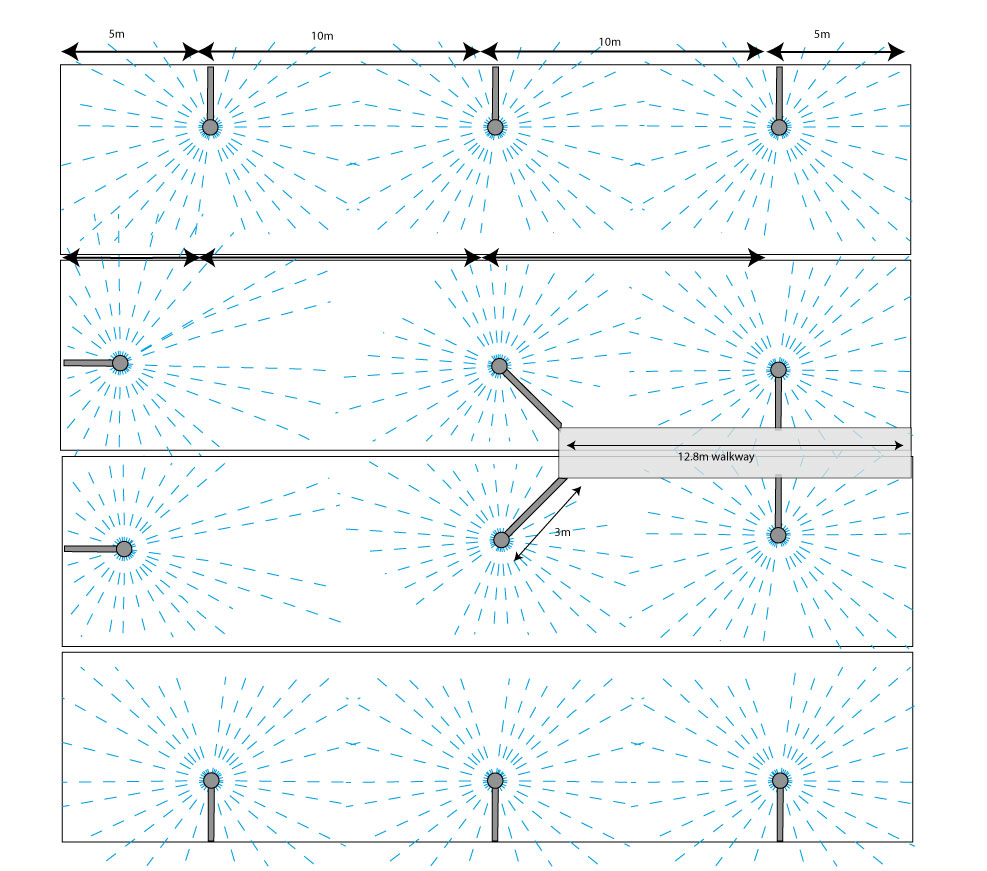
Large-diameter storm tanks can present a significant cleaning challenge, particularly where full internal coverage is required. The StormBlaster™’s rotary jet action can be used to develop a planned cleaning pattern across the tank’s internal surfaces.
The appropriate installation position and configuration should be established using tank dimensions, obstructions, internal geometry and the required coverage. For corrugated and GFS tanks, the assessment should consider the wall profile, panel joints, fittings, surface-coating requirements, and the geometry of the tank floor and walls, with particular attention to any areas where deposits could accumulate.
The objective is to deliver effective cleaning across the tank, not simply to achieve a high water flow rate.
Supporting automated maintenance
By incorporating the StormBlaster™ into the original tank design, engineers can plan the mounting arrangement, water supply, access requirements and operating sequence before commissioning.
This approach can help avoid the complications associated with retrofitting cleaning equipment after construction and provide a more integrated solution for ongoing maintenance.
Fitting the StormBlaster™ to Corrugated Stainless-Steel and GFS Tanks
The successful integration of the StormBlaster™ into corrugated stainless-steel and Glass-Fused-to-Steel (GFS) storm tanks requires careful consideration of tank geometry, internal surface materials, cleaning coverage and operating conditions.
By assessing these factors during the design stage, engineers can develop a cleaning solution tailored to the tank's construction while supporting effective maintenance and long-term operational reliability.
Corrugated stainless-steel tanks
For corrugated stainless-steel tanks, particular attention should be given to the wall profile and the potential for sediment and residual solids to accumulate within corrugations. The StormBlaster™'s mounting position and elevation should be selected to provide suitable coverage across the internal surfaces. Where rubber liners or protective coatings are present, the cleaning system must be compatible with the specified material, with operating pressure, jet impact and cleaning duration validated through appropriate trials. The mounting arrangement and supporting structure must also be suitable for the equipment and its operating loads.
Glass-Fused-to-Steel tanks
For GFS storm tanks, the primary consideration is achieving effective cleaning while protecting the integrity of the glass coating. The installation should be designed to provide suitable coverage of the tank floor, walls, panel joints and relevant internal features, while positioning the equipment to minimise obstructions and maintain access for inspection and maintenance. The available water supply must also meet the system's flow and pressure requirements, and the proposed operating conditions should be assessed against the tank manufacturer's coating specifications and recommendations.
For both tank types, the StormBlaster™ should be specified according to the individual application rather than a one-size-fits-all approach. Tank dimensions, internal geometry, surface materials, deposit characteristics, mounting arrangements, water availability and required cleaning performance should all inform the final configuration. Where necessary, representative cleaning trials should be undertaken to validate performance and confirm material compatibility before installation.
By incorporating these considerations into the initial design, water companies, consulting engineers and contractors can integrate the StormBlaster™ into new storm tank infrastructure more effectively, helping to support reliable cleaning, efficient maintenance and the long-term performance of wastewater storage assets throughout AMP8 and beyond
Evidence-Led Selection: Testing Before Installation
The performance of any high-impact cleaning system should be evaluated against the specific requirements of the tank and its internal surface.
The StormBlaster™ has been successfully tested on a customer-supplied tank lining, demonstrating cleaning action with no damage observed under the test conditions. As liner materials, surface conditions and cleaning requirements vary, we recommend application-specific testing before installation to assess cleaning performance and compatibility with the tank’s internal surface.
Where appropriate, a site assessment may be carried out to determine:
- The type and level of deposits requiring removal.
- The cleaning coverage achieved at different operating conditions.
- The water consumption and cleaning-cycle duration.
- The condition of the internal surface following cleaning.
- The practical requirements for installation, inspection and maintenance.
This approach helps engineers make an informed decision based on the actual application rather than relying on theoretical coverage alone.
Aligning StormBlaster™ Solutions with AMP8 Objectives
AMP8 is not simply a programme of infrastructure construction. It is an opportunity to improve how wastewater assets are designed, operated and maintained over their service lives.
The sector’s investment programme includes new storm storage capacity and improvements to existing networks, alongside wider measures to reduce the frequency and impact of storm overflow discharges. The StormBlaster™ supports this broader infrastructure programme through its potential contribution to effective tank maintenance.
Improving operational readiness
Storage tanks must be available to perform their intended function when required. Effective cleaning between relevant operating events can help maintain readiness by removing residual deposits, subject to the site’s operating and maintenance procedures.
Supporting efficient maintenance
Integrating cleaning equipment during the design phase can help reduce the need for avoidable manual cleaning and improve maintenance planning. Actual savings will depend on the existing cleaning method, tank conditions and operating regime.
Considering whole-life costs
Water companies and contractors need to consider more than the initial capital cost of a tank. Cleaning equipment selection can also affect water use, maintenance labour, downtime and the resources required to keep the asset operational.
Supporting environmental objectives
Storm tanks are one component of a wider strategy to manage excess flows and reduce storm overflow discharges. The StormBlaster™ does not itself increase storage capacity or prevent sewer overflows; rather, it can support the maintenance of storage assets that form part of the overall wastewater management system.
Designing for long-term performance
AMP8 projects benefit from considering cleaning requirements early in the design process. Coordinating tank construction, access, water supply and cleaning-system installation can help avoid costly changes later and create a more maintainable asset.
Why Specify Tank Cleaning at the Design Stage?
For civil engineering contractors, consulting engineers, water companies and tank manufacturers, the selection of a suitable cleaning system should form part of the wider tank-design discussion.
Retrofitting a cleaning system after construction may introduce additional challenges involving mounting arrangements, pipework, access and available water supply.
By considering the StormBlaster™ during the design phase, project teams can assess the required cleaning coverage, determine the appropriate installation arrangement and establish the operating conditions needed for the application.
This is particularly valuable for modular tank designs, where cleaning equipment and associated services can potentially be incorporated into the overall installation plan.
Early collaboration also allows the proposed solution to be assessed against the tank manufacturer’s requirements, site-specific operating conditions and the project’s maintenance strategy.
Sources for AMP8 context
Ofwat — AMP8 investment announcement: https://www.ofwat.gov.uk/ofwat-approves-104bn-upgrade-to-accelerate-delivery-of-cleaner-rivers-and-seas-and-secure-long-term-drinking-water-supplies-for-customers/
Water UK — Investment plan to reduce sewage spills:
https://www.water.org.uk/investing-future/ps104bn-investment-plan/investing-stop-sewage-spills